AI Study Science While Studying at Kazan Federal
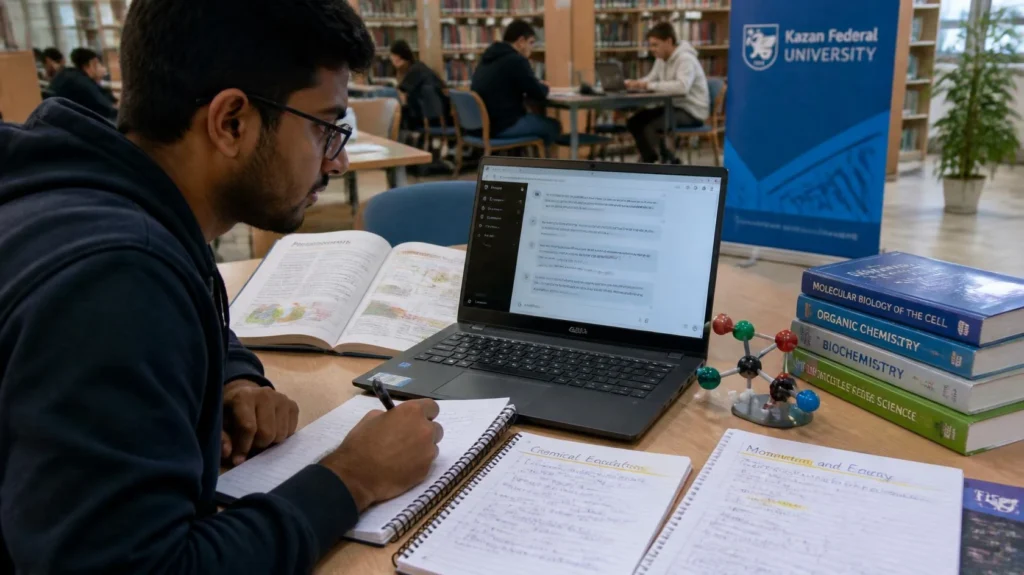
Studying science can feel intense, layered, and sometimes a little overwhelming, especially when the material moves from theory to practice in a single lecture. At Kazan Federal University, that challenge feels even more relevant because the university includes the Institute of Information Technology and Intelligent Systems and the Institute of Artificial Intelligence, Robotics and System Engineering, which makes AI-driven learning especially timely for students there.
AI Study Science is not about replacing the student’s effort, it is about making the effort sharper, faster, and more focused. When used well, it helps science learners organize ideas, untangle difficult concepts, and study with more confidence while keeping the learning process active and thoughtful.
Why I Use AI For Science Learning
Science Learning AI fits naturally into science study because it can turn dense academic material into something clearer without stripping away meaning. That matters at Kazan Federal, where students may work across technical subjects, research tasks, and English-taught programs that already demand strong concentration and precise understanding.
Summarizing Scientific Research Papers
Long research papers can bury the main point under pages of detail. AI helps pull out the central question, method, result, and conclusion so the reading becomes more manageable. Audrey Azoulay, Director-General of UNESCO, said that “Artificial intelligence actually offers major opportunities for education,” and that is exactly what happens when AI is used to simplify scientific reading with care.
Understanding Complex Science Concepts
Some science topics do not become difficult because they are impossible, they become difficult because they are explained too quickly or too abstractly. AI can restate them in simpler terms, compare them with familiar examples, and repeat the idea from a different angle until it clicks. That kind of support is especially useful when you want to move from memorizing to understanding.
Using AI Responsibly At KFU
AI works best when it is used with discipline. UNESCO emphasizes responsible use in education, and NIST’s AI Risk Management Framework highlights the importance of trustworthy and responsible AI practices. In a university setting, that means checking facts, thinking critically, and using AI as a study companion rather than a shortcut.
How AI Improves My Study Routine
A strong study routine is built on consistency, not chaos. When AI is used intentionally, it can help science students create structure from scattered notes, which makes revision calmer and far more efficient.
Creating Clear Study Summaries
After class, AI can turn rough lecture notes into cleaner summaries that spotlight the most important definitions and ideas. That makes review sessions more productive because you spend less time searching for the main point and more time understanding it. For students looking for AI Study Science methods that actually save time, this is one of the simplest and strongest uses.
Building Science Flashcards With AI
Flashcards work best when they test understanding, not just memory. AI can help generate question-and-answer cards from a lesson, a chapter, or a lab topic so you can study in shorter bursts with more precision. That approach keeps revision active and makes difficult terms easier to retain.
Reviewing Topics Before Exams
Before exams, AI becomes useful as a quick review partner. It can quiz you, reorganize topics by difficulty, and expose weak spots before they become exam-day problems. WHO Director-General Tedros Adhanom Ghebreyesus warned that, “AI can bring enormous potential but also must be used with caution, and that balance matters when students prepare under pressure.”
AI For Practical Science Preparation
Science learning is not only about theory. It also depends on preparation, observation, and the ability to enter a lab with a clear mind and a clear process.
Preparing For Laboratory Sessions
AI can help students get ready for practical work by reviewing the aim of the experiment, the key vocabulary, and the expected outcome. That kind of preparation reduces hesitation and helps the student arrive more focused, which is especially useful in fast-moving laboratory environments.
Reviewing Experimental Procedures
Complex procedures are easier to follow when they are broken into logical steps. AI can rephrase a protocol in a cleaner order, making it easier to understand where attention matters most. This is not about skipping the procedure, it is about seeing it more clearly before the work begins.
Checking Scientific Understanding
A smart study routine includes self-checking. AI can ask follow-up questions, test whether a concept is really understood, and reveal where the explanation still feels thin. That makes learning more durable because it pushes the student to think, not just read.
Making The Most Of AI For Science Study
The real value of AI Study Science appears when it is used with purpose. At Kazan Federal University, where science, technology, and intelligent systems already sit close to the center of academic life, AI can support clearer reading, better revision, and stronger preparation without taking away the student’s own judgment. Science Learning AI becomes most effective when it helps you learn more deeply, not more passively.
You should use it as a study partner, keep your reasoning active, and let it sharpen your understanding of science instead of replacing it. Start using AI Study Science with intention today.