My First Science Program Semester at Kazan Federal
Every great academic journey begins with a single moment of curiosity. You may wonder what it truly feels like to study science in a world-class university abroad, where every classroom discussion, laboratory experiment, and conversation with classmates opens the door to new perspectives. The first semester is often filled with excitement, uncertainty, and unexpected discoveries that shape not only academic performance but also personal growth.
Starting my Science Program Semester at Kazan Federal University became far more than simply attending lectures. It marked the beginning of learning how scientific thinking develops through real experiences, practical laboratory work, and international collaboration. If you are planning to study science overseas, this story offers practical insights into what you can realistically expect while preparing for a successful academic journey.
How My Science Journey Began
The first weeks at university can determine how smoothly the rest of the semester unfolds. Adjusting to a new educational environment requires curiosity, consistency, and the willingness to embrace unfamiliar experiences. Throughout this Campus Adaptation Journey, every interaction, classroom activity, and campus experience gradually became an important part of adapting to university life and understanding how science is learned beyond textbooks.
Attending My First Science Classes
Walking into my first science class was both exciting and challenging. The learning environment encouraged students to ask questions, discuss scientific concepts, and solve problems rather than simply memorize theories. This interactive approach made every lesson feel meaningful because each topic connected directly with real scientific applications.
Albert Einstein once said, “The important thing is not to stop questioning. Curiosity has its own reason for existing.” That mindset perfectly reflected the atmosphere inside the classroom, where curiosity became the starting point for deeper scientific understanding.
Exploring Science Facilities At KFU
Exploring the science facilities at Kazan Federal University quickly showed how practical learning complements theoretical knowledge. Modern laboratories, research centers, digital learning spaces, and advanced scientific equipment allowed students to transform classroom concepts into hands-on experience.
The learning experience also naturally introduced topics related to international science education, research-based learning, STEM education, scientific research skills, laboratory experience, and higher education abroad, creating a stronger academic foundation throughout the semester.
Meeting Faculty And Classmates
Meeting professors and classmates from different countries became one of the most rewarding parts of the semester. Faculty members were approachable and always encouraged discussion, while classmates shared unique perspectives that broadened every conversation inside and outside the classroom.
What I Learned During My Semester
As the semester progressed, every challenge gradually became an opportunity to improve. Assignments, laboratory activities, and collaborative learning were no longer obstacles but stepping stones toward becoming a more confident science student.
Adapting To Science Coursework
Science coursework demanded discipline, organization, and continuous practice. Reviewing lecture materials regularly and asking questions during discussions helped transform difficult topics into manageable lessons. Small improvements each week eventually produced noticeable academic progress.
Participating In Laboratory Sessions
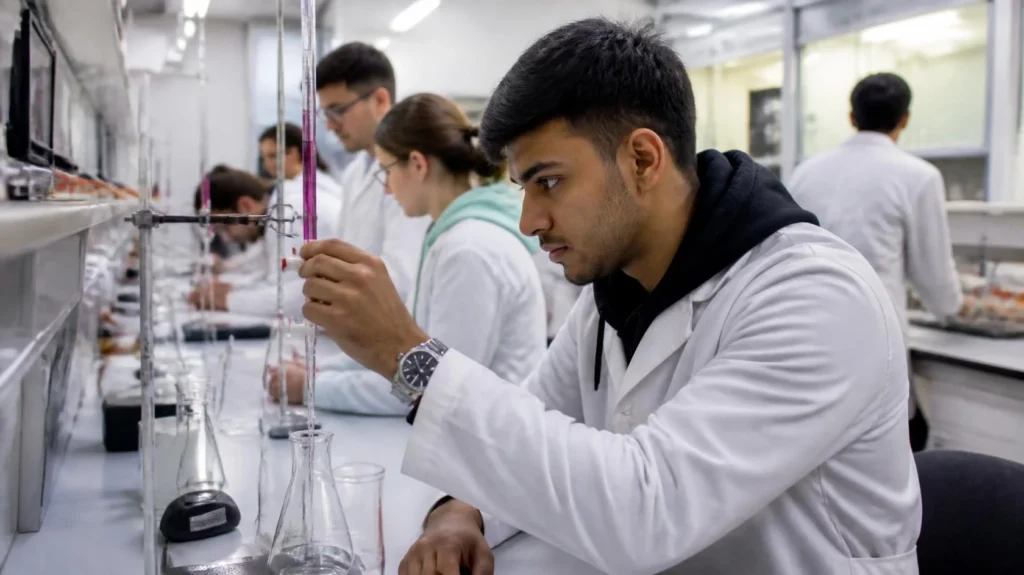
Laboratory sessions became the highlight of every week because they connected scientific theory with real observation. Designing experiments, collecting data, and interpreting results strengthened analytical thinking while reinforcing the importance of scientific accuracy and ethical research practices.
Carl Sagan wisely observed, “Science is a way of thinking much more than it is a body of knowledge.” That perspective became increasingly meaningful after experiencing how every laboratory session encouraged critical thinking rather than simply producing correct answers.
Managing Assignments And Exams
Managing assignments and examinations required careful planning instead of last-minute preparation. Dividing larger projects into smaller tasks, maintaining a study schedule, and collaborating with classmates significantly reduced academic pressure while improving learning outcomes.
How My Confidence Continued To Grow
Confidence rarely appears overnight. It develops through consistent effort, repeated practice, and the willingness to learn from mistakes. Looking back, every small achievement during the semester became an important milestone that prepared me for greater academic challenges ahead.
Developing Practical Science Skills
Hands-on scientific activities improved practical abilities far beyond classroom learning. Writing laboratory reports, analyzing experimental results, and presenting scientific findings became valuable experiences that strengthened both technical knowledge and communication skills.
Working On Collaborative Projects
Collaborative projects demonstrated that successful scientific work depends on teamwork as much as individual ability. Working alongside students from diverse academic and cultural backgrounds encouraged better communication, stronger leadership, and more creative problem-solving.
Preparing For Future Science Courses
Completing the first semester provided a solid foundation for more advanced science courses. The experience inspired continuous learning while building greater confidence to face increasingly complex scientific subjects in the future.
Take Your First Step In Science
Every meaningful scientific journey starts with a willingness to learn, adapt, and remain curious. Looking back, the first semester was not simply about passing exams or completing laboratory reports, it was about discovering new ways of thinking, building resilience, and realizing that growth often begins outside your comfort zone. Those lessons continue to shape every new academic challenge that follows.
If you are considering your own first semester abroad, remember that every question you ask, every experiment you complete, and every challenge you overcome brings you one step closer to becoming the scientist you hope to be. Your next discovery may begin with a single decision to start today.